


%20of%20the%20lower%20extremities.jpg)
Treatment of varicose veins in the legs with drugs is not always effective.It is especially difficult to cure varicose veins if they are in an advanced stage.In this case, surgery is the only option to eliminate the disease. Classic phlebectomy, mini-phlebectomy, sclerotherapy, laser vein removal are effective methods for solving the problem of varicose veins.However, not all women who suffer from varicose veins immediately decide on one of them.Fear of the surgeon and the operating room, fear of general anesthesia and complications stop patients, so they are afraid to go to the doctor for a long time, relying on some forms of treatment at home.Meanwhile, the varicose veins progress and the condition worsens.
Will varicose veins "appear" again?Will I have to hide the unsightly stitches after surgery?Will you really need to wear a special gown for a whole year after surgery?These and other questions torment women and remain unanswered, and such an operation, necessary for the health of the legs, is postponed for months, and often even years.But today, not only classical phlebectomy is performed, which is a complete surgical intervention (with general anesthesia, long recovery period and return to normal life), but also mini-operations in the veins, which are performed on an outpatient basis, with local anesthesia, and after which no long medical leave is required.
Choosing a treatment method for varicose veins
Each of the listed operations, be it classic phlebectomy, mini-phlebectomy, laser or sclerotherapy, is prescribed by the doctor taking into account the stage of varicose veins of the lower extremities and the condition of the patient.You cannot choose the method of removing varicose veins yourself;determined by the doctor after the examination:
- Duplex scanning of the vessels (veins) of the lower extremities is universal and informative,
- X-ray contrast venography and computed tomography methods are rarely used in complex diagnostic cases.
Features of surgical methods for the treatment of varicose veins
Various types of operations are widely practiced in hospital and outpatient settings.Each method has its own indications and contraindications, pros and cons.
Classic vein removal surgery
Very often the attending physician chooses classic phlebectomy.
The operation is performed under anesthesia (general or spinal).During the operation, the great saphenous vein is removed together with the varicose channels.After surgery, you will need to stay in the hospital for a few days, then at home for a few weeks.Sutures are removed on day 7-10 after surgery;healing time varies individually.
The advantage classic phlebectomy is very effective in the treatment of moderate and severe varicose veins.The technique has been used for many decades, has proven itself successfully and has allowed millions of patients to keep healthy feet.
Disadvantages include a long recovery period, deterioration of general well-being after surgery and the inability to immediately return to your usual routine (work, driving, long distances on foot), as well as insufficient cosmetic effect that lasts for several months.
Mini-phlebectomy
Unlike classic surgery, mini-phlebectomy involves removalindividual superficial veins affected through multiple small incisions or punctures.The surgeon uses small special instruments (hooks, mini-scalpels).The intervention is performed at different stages of the disease and can be combined with other methods (laser removal, sclerotherapy).
Advantages of the method:
- ambulatory surgery, being under the supervision of doctors for several hours after the procedure,
- local anesthesia,
- quick healing of punctures and micro-cuts, without stitches,
- the ability to immediately return to your usual routine, as well as an excellent cosmetic effect.
After the operation, some complications are possible - hematoma in the area of incisions and punctures, skin staining in the area of the operated veins, but in general these risks are minimal.
Laser removal
Laser removal of varicose veins (endovasal laser coagulation of veins) is an innovative method that is widely used and very effective.
During an intravascular (endovasal) operation, a small cut or puncture is made in the skin: under ultrasound guidance, a long light guide is inserted through a catheter into the vein.Through it, a laser beam acts on the walls of the vein, "gluing" them together.
The advantage of this method is to perform the surgery on an outpatient basis, under local anesthesia. Laser removal of varicose veins it can be combined with mini-phlebectomy, sclerotherapy and provides an excellent cosmetic effect, which is very important for women of any age.The catheter insertion site is closed with a special plaster, which is removed after 8-10 days;no stitches required.After the operation, you can live at your usual pace, practically without restrictions.
Compared to classic phlebectomy Laser vein removal for varicose veins it is considered less traumatic and safe.
But it is worth noting that the method is not considered universal for the treatment of patients with varicose veins (like any other).Performing such an operation, such as the classical removal of veins, is possible only after a complete examination of the patient, taking into account all the features of the course of the disease.
Choosing a clinic for the treatment of varicose veins and surgery
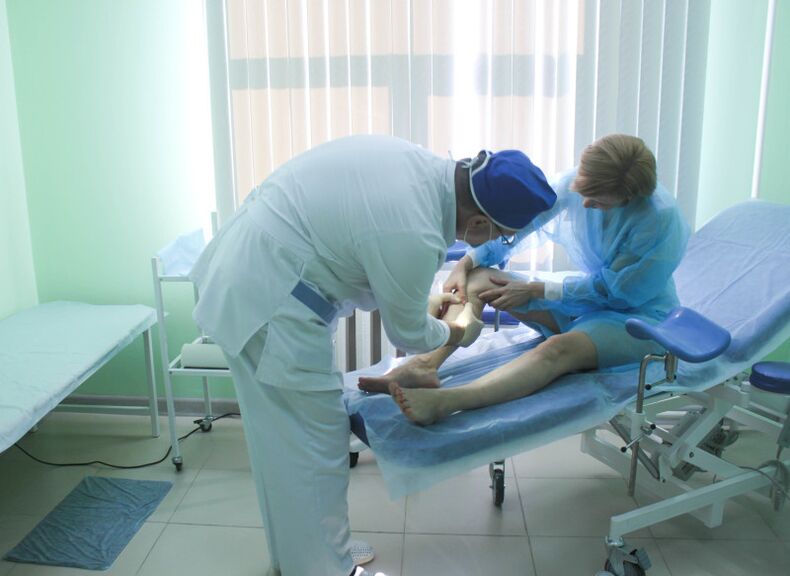
Conservative and surgical treatment of varicose veins is performed today in many public and private medical centers.The clinic to which you trust your health should have a serious reputation and experienced doctors who are skilled in various methods of vein surgery.
Classic phlebectomy, miniphlebectomy, sclerotherapy (in different variants), etc. are performed in high-tech operating rooms.It is important that the choice of the method by the doctor is always strictly justified by the clinical picture and discussed with the patient, explaining the pros and cons of the methods, the risks of the consequences and possible complications.For example, in Clinic for the treatment of varicose veins It is not always advisable to use minimally invasive ("light") techniques.Contraindications for this: severe varicose veins, thrombophlebitis, blood coagulation disorders and others.In this case, a combined operation is performed to achieve a good result.
For doctors clinics for the treatment of varicose veins, the results of therapy and the condition of patients are very important - both in the early and late postoperative period.That is why surgeons are always in touch and ready to answer any question of interest to operated patients.
Advice from a phlebologist
Regardless of the choice of surgical techniques for the removal of varicose veins and the possibility of small outpatient interventions, each operation requires a period of rehabilitation and careful attention to health.Therefore, from the first appointment to the end of the medical supervision after the operation, you must do everything Recommendations from a phlebologist:
- first of all, wearing a medical gown;special underwear is worn immediately after surgery, after phlebectomy.The first two days, as a rule, it is recommended to wear knitted clothes all the time.Then, daily wear for 3-6 weeks (according to the doctor's indications);
- after endovasal interventions (laser therapy), which are not combined with any other method, compression therapy is not necessary;in the case of a combined operation, the dressing is required for one or two months.The first two days, the knitting is left overnight.
- others Recommendations from a phlebologist are related to physical activity and a healthy lifestyle, control of excess weight and changes in working conditions if it involves prolonged static load on the feet.You should walk every day for 40-60 minutes.You can add special exercises to your daily walks to strengthen your veins and blood vessels.During the first two months after surgery, perform all physical exercises wearing compression stockings.Remove squats and lifting weights (barbells, dumbbells) from the complex.Also, don't stress your lower abdomen too much.
In general, the most important condition for the successful correction of varicose veins is the cooperation of the doctor and the patient.Trusting your doctor, following all his recommendations and then following the rules of prevention helps to maintain the health and beauty of your feet.